



We all know the guilt when a resolution fizzles out. You had a good run, three months of the gym, or the daily walk, or actually taking the creatine, the streak on your watch climbing into triple figures, people starting to notice... and then a kid got sick, or you went on holiday, or you simply lost the thread, and now it’s been a month, and the thought of going back feels harder than when you began.
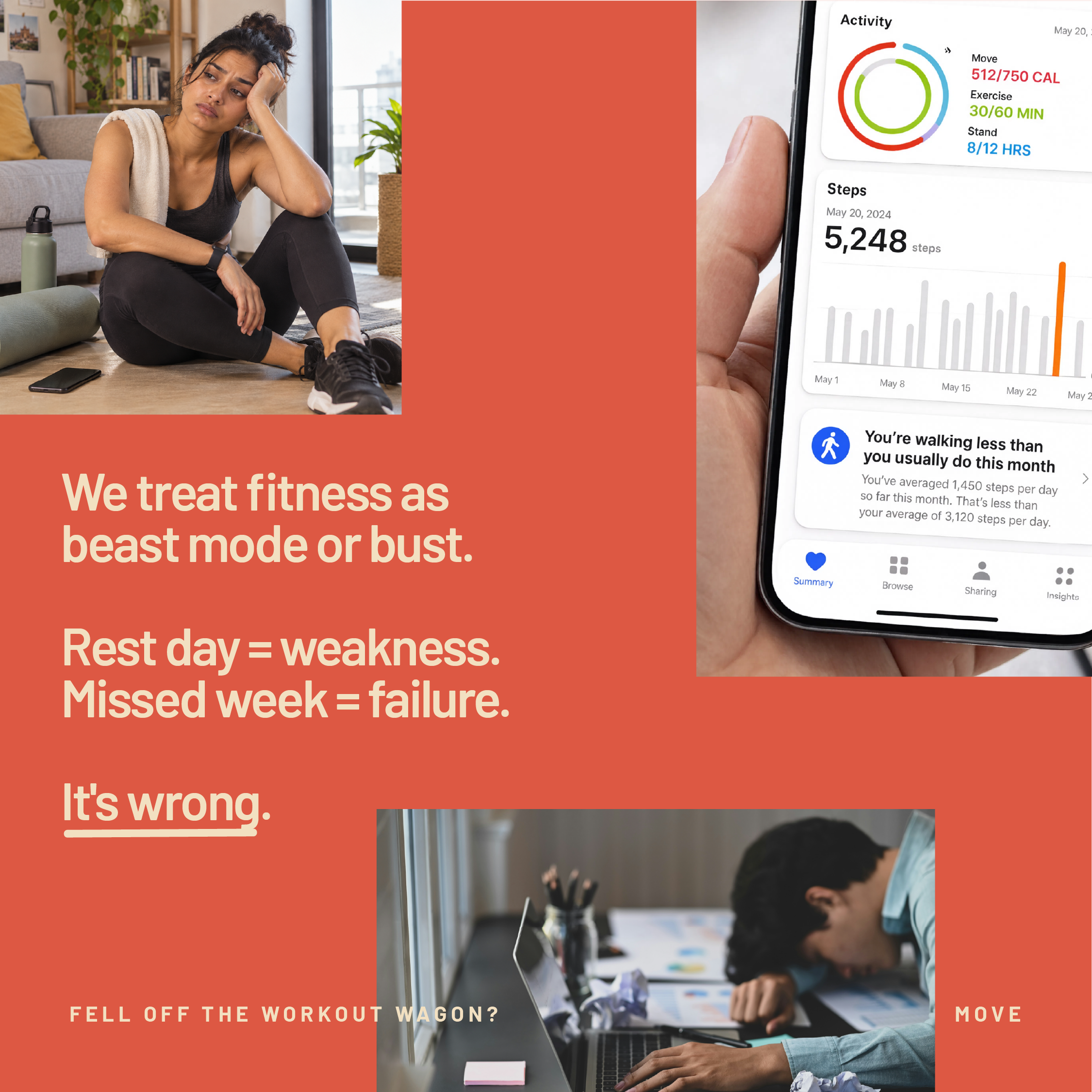
In a way, that guilt is cultural more than personal. We’ve absorbed a particular story about effort: that it’s beast mode or bust, baby, and where a rest day is weakness and, even worse, a missed week is failure! Every time an influencer shouts NO DAYS OFF over a montage, and we internalise that belief, that’s the story of intensity that sells the 75-day challenge and the all-or-nothing detox. That belief says that consistency means never, ever stopping (spoiler: it doesn’t) and that if you break the chain, the whole exercise was futile and you are back to zero (another spoiler: this is untrue).
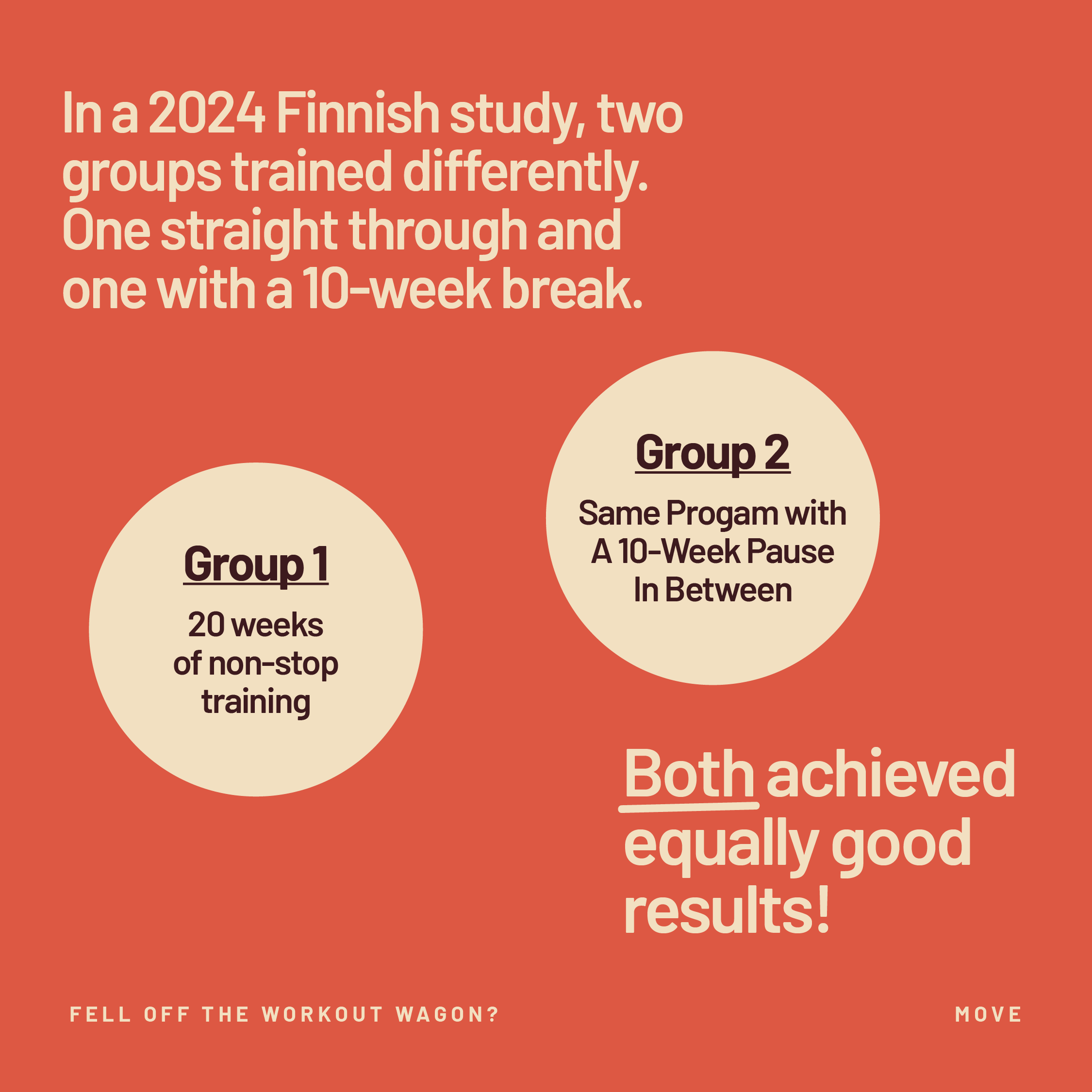
A 2024 study from the University of Jyväskylä in Finland enrolled 55 untrained adults and split them into two groups. One group trained continuously for twenty weeks, while the other trained for ten weeks, then stopped completely for ten, and then resumed training again for a final ten. A full ten-week break, right in the middle, the sort that might send a lot of us into a spiral of ‘oh god, I ruined it again!’
At the end, the two groups had gained essentially the same muscle size and strength. Yes, you read that correctly: the break group did lose ground during their ten weeks off; that part is real, but when they came back, they regained it startlingly fast, most of it inside the first five weeks, and then carried on climbing to the same destination as the group that never stopped. The researchers were clear about one caveat, and this is the bit to remind yourself of when you’re feeling guilty on vacation or after a little slump: the break group still got to the same place, and sure, it took them thirty weeks rather than twenty, but the pause didn’t erase the progress.
Cool, great info, what should we do with it?
When a break arrives, don’t panic. Some breaks you choose, and some choose you: a new baby, a bad flu, a brutal work stretch… either way, the spiral of guilt does more damage than the time off. Get back to it when you realistically can, and trust that the ground comes back quickly.
Don’t fear the deliberate pause, either. The research suggests a week, or even a good deal longer, of little or no training is unlikely to cost you anything permanent. So the occasional lighter week, the holiday where you actually rest, the deload the trainers all recommend, none of it is the failure it feels like. It may even be what lets you keep going for years rather than months.
Come back to the habit, not the personal best. The mistake in returning is trying to pick up at the exact weight and pace you left off at, feeling the gap, and quitting again in disgust. The move is to accept you’ll do less at first, and let the speed of the comeback do the encouraging. You are re-establishing a rhythm, not resuming a performance.
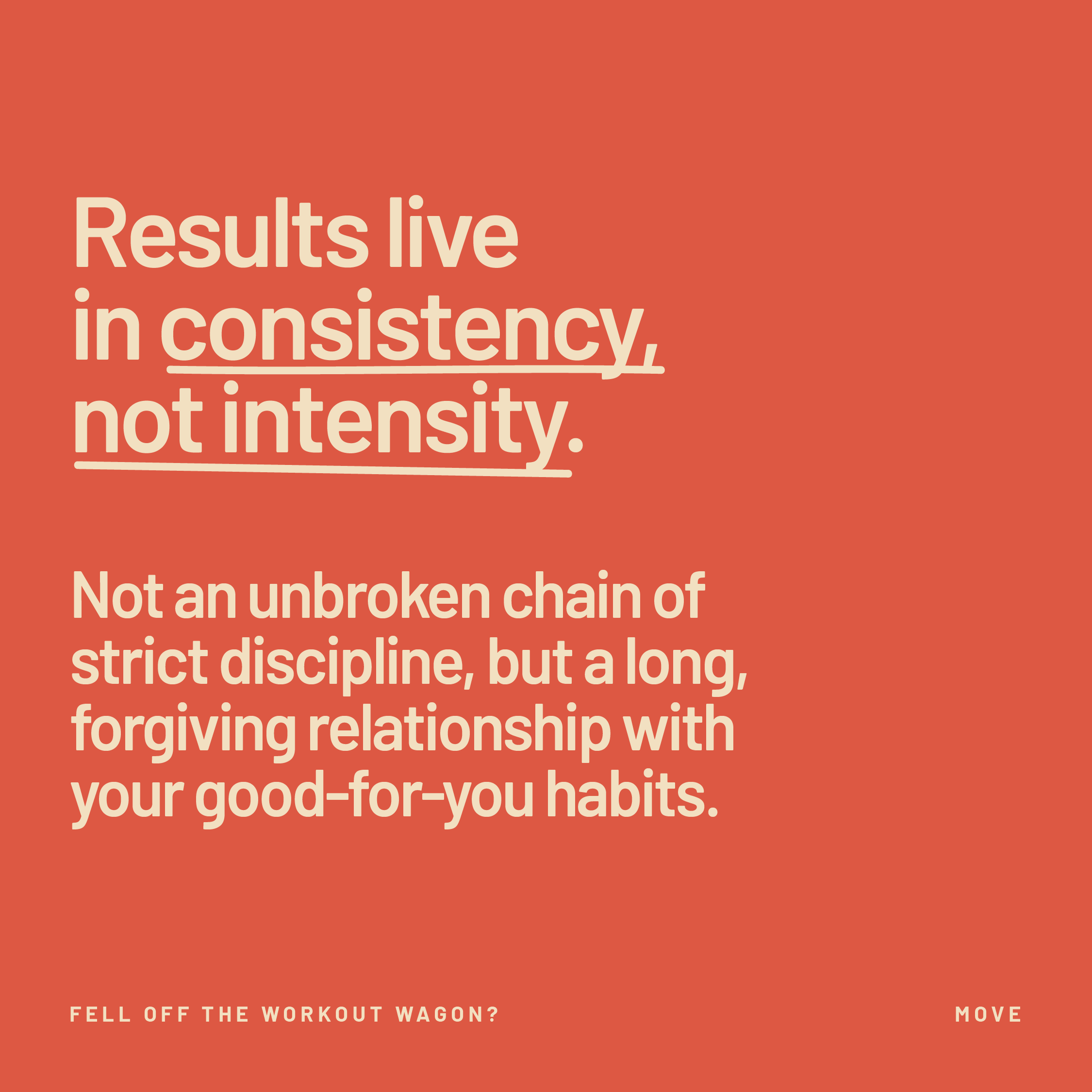
All of which is really one idea, and it’s the same one we keep coming back to here: that the results live in the consistency, not the intensity, and consistency might not mean an unbroken chain. It means a long, forgiving relationship with something good for you, one with room for the weeks life takes away, judged over years rather than by the streak on a screen. The real message? Fell off the wagon? Don’t worry, you can always, always get back on.
1,000 Ways to Live Well is a Mille publication. Mille is a modern nutrition brand built around everyday rituals, starting with protein that doesn't ask you to compromise on taste. millesupergrain.com