


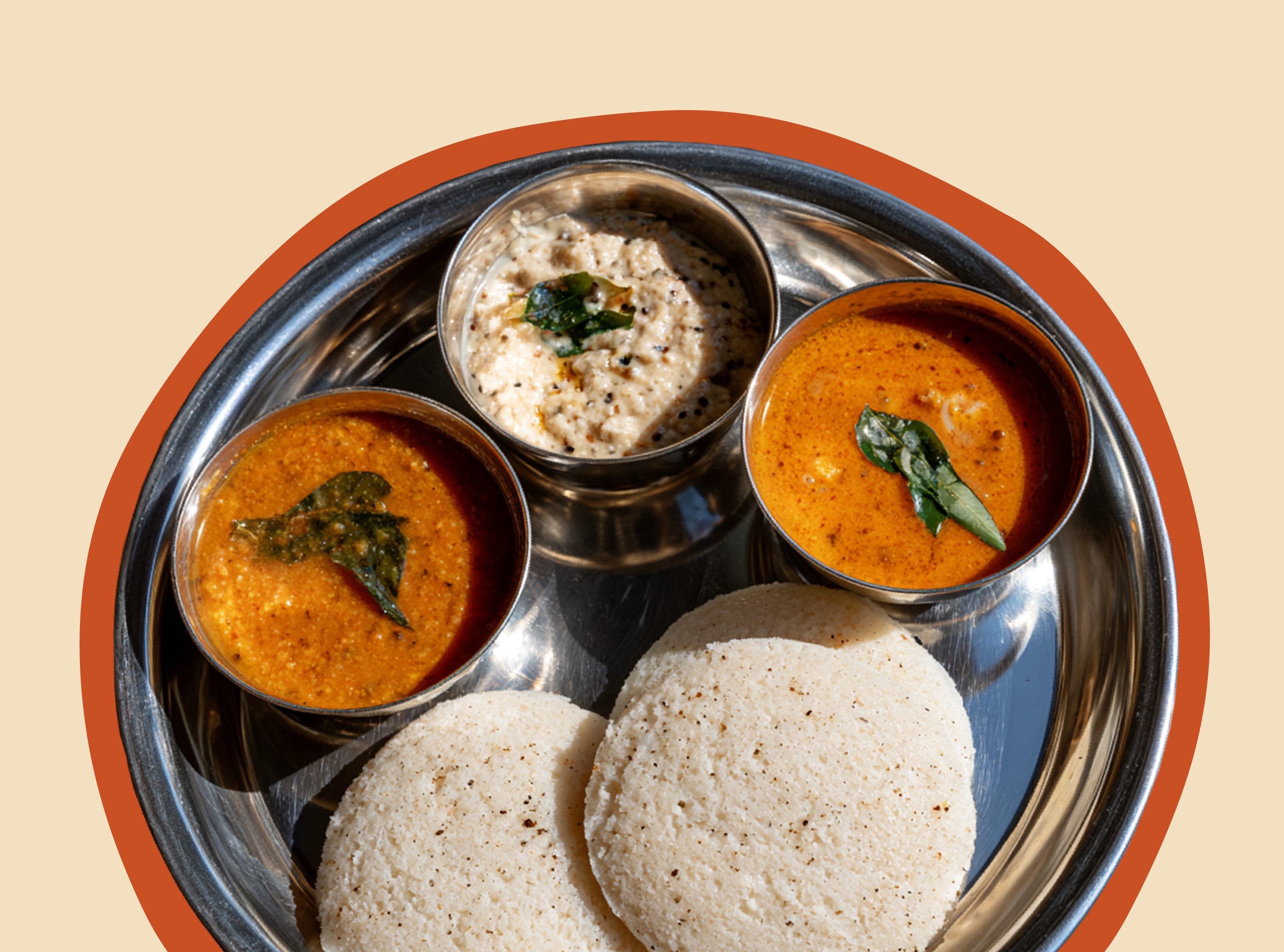
In most Indian kitchens tonight, a small bowl of milk will be set with a spoonful of yesterday’s dahi, which was set with a spoonful of the day before’s. Trace that line back, and it may run through moves and marriages and deaths, through power cuts and monsoons, to a starter that somebody’s mother or aunt or neighbour handed over in a steel katori years ago. The culture in that bowl is a living community of bacteria, kept going by a daily act of renewal, and very likely older than anyone eating from it.
India is one of the world's great fermenting cultures, and the reasons are pretty practical: for one, heat does half the work, since microbes thrive in warmth. For most of history there was no other way to keep food through a long summer, or a monsoon that rots anything fresh, and in the hills fermentation is still how a harvest lasts until the next one. A diet built largely on grains and pulses gave people every reason to make those foods easier to digest and more nourishing, and fermentation did both. Spread that across hundreds of regional cuisines, each shaped by its own weather and ingredients, and you get a fermented food culture so ordinary it rarely gets called fermentation at all.
Something eats it first
Fermentation is what happens when microorganisms get to a food before you do. Bacteria, yeasts, and moulds break down its sugars and starches and, in doing so, produce acids, gases, alcohol, and a long list of compounds that change how the food tastes, how long it keeps, and what your body can take from it. It was discovered by accident, many times over, as wet grain became beer, warm milk became curd and grapes in a clay vessel became wine. The earliest chemical trace of a deliberately fermented drink comes from pottery at Jiahu in northern China, around nine thousand years ago. There is a reasonable argument that fermentation is the oldest food technology after fire, and the only one that does the work by itself. The acid the microbes produce also makes food hostile to the microbes that would spoil it, which is how people kept milk through a hot week several thousand years before anyone knew what a microbe was.
A country fermented by its weather
In the south, rice and urad dal are ground into batter in the afternoon and left overnight, and by morning wild bacteria and yeasts have soured it, lightened it and broken the grain down into something far easier on the body. That’s idli, dosa and appam, which sometimes get a splash of toddy to hurry it along. Toddy itself, the sap of the coconut or palmyra palm, is fizzing within hours of being tapped and has a whole culture of its own along the Kerala and Goan coasts.
In the east, the tradition is rice and water. Panta bhat in Bengal, pakhala in Odisha and poita bhat in Assam are all cooked rice left in water overnight and eaten the next morning with salt and chilli, faintly sour and cooling. It was farmers’ food, eaten before a day in the fields, and it’s now the subject of microbiology papers on how the bacteria that colonise it overnight free up the minerals locked in rice.
In the north, where winters are cold and dry, fermentation is seasonal and slow. Kanji, the deep purple drink of black carrots, mustard seed and water, is left in the winter sun for a few days, in the one season when the carrots go dark and the sun is gentle enough to sour without spoiling. And everywhere, all year, there is dahi.
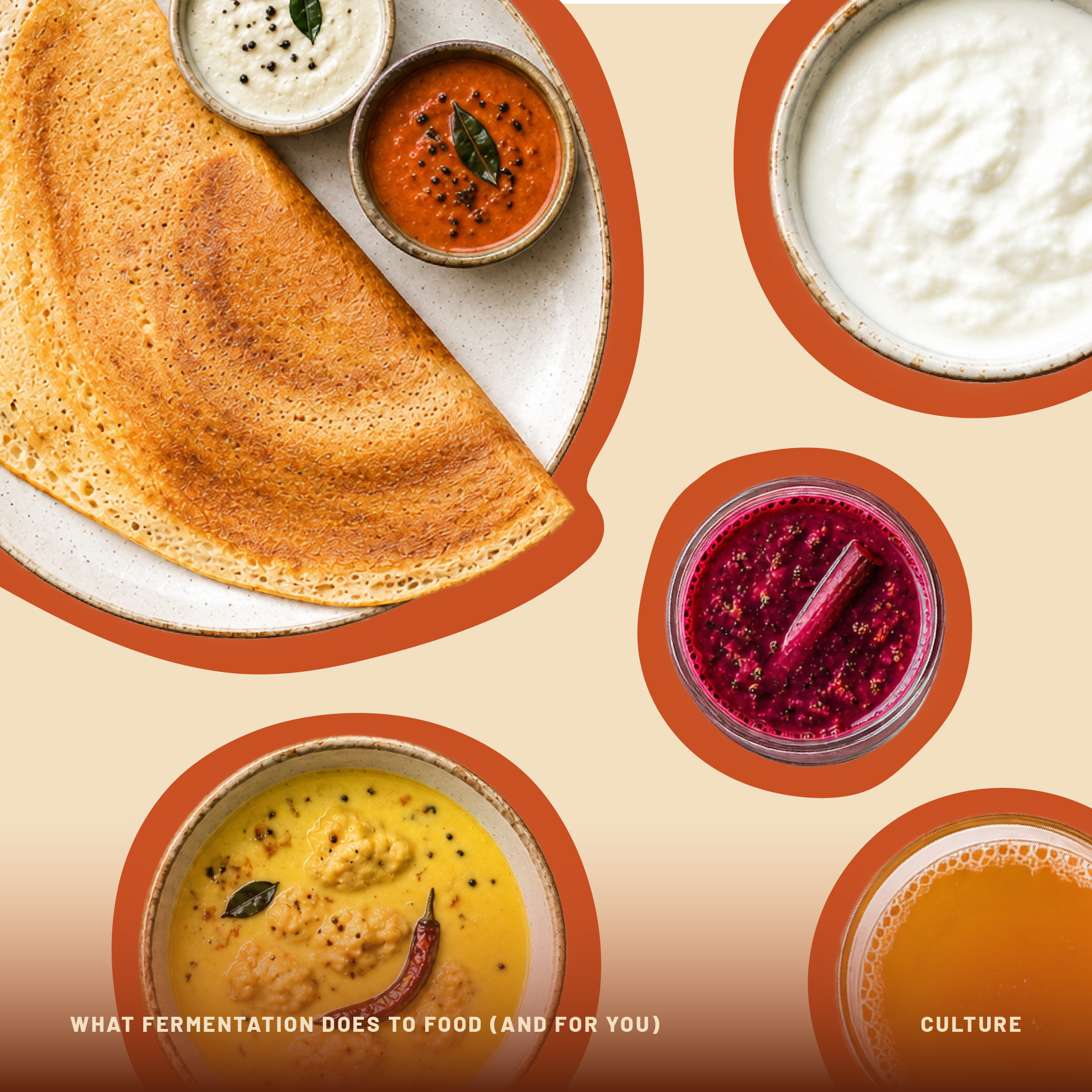
The north-east is the country's most sophisticated fermenting region and the least written about. In hills where the monsoon is relentless, fermentation keeps food between harvests. Soybeans become kinema in Sikkim and Darjeeling, axone in Nagaland and tungrymbai in Meghalaya, each with its own microbes and its own formidable smell. Bamboo shoots become khorisa in Assam, fish becomes ngari in Manipur, mustard leaves become gundruk, and rice is brewed into apong, zu, judima and haria, a different beer for nearly every community. Over centuries, necessity became some of the country's most complex flavours.
What the microbes leave behind
The health case for fermented food has three parts, and they’re worth keeping separate because wellness copy tends to blur them into one word, usually “probiotic”.
First, fermentation does some of your digesting for you. Bacteria break down starches and proteins before you eat them, which is why Indian households turn to idli when someone is unwell. They also break down phytates, compounds in grains and pulses that bind iron, zinc, and calcium, so fermented dal and rice release more of their minerals.
The second is that fermentation adds things. Microbes produce vitamins, particularly the B group, along with other compounds the gut responds to. Research on kinema found that levels of vitamins B2 and B3 rise as the soybeans ferment.
The third has the newest evidence. In 2021, a team at Stanford put 36 healthy adults on a diet high in fermented foods for ten weeks. Participants went from less than one serving a day to around six, and their gut microbial diversity rose while 19 inflammatory proteins in their blood fell, with bigger effects from bigger servings. It was a small trial, so the finding is emerging, and every food in it, from yoghurt and kefir to kimchi and kombucha, was eaten uncooked.
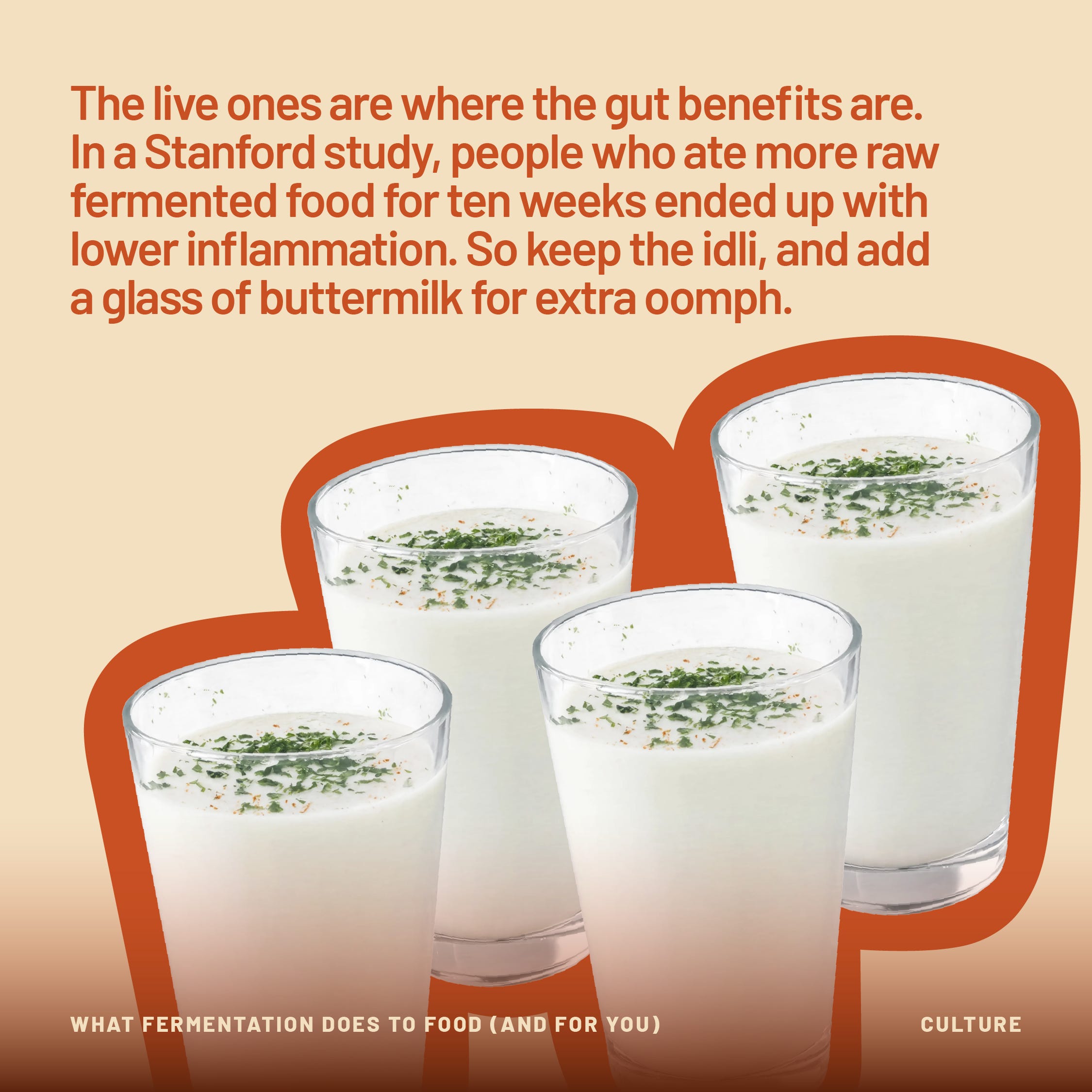
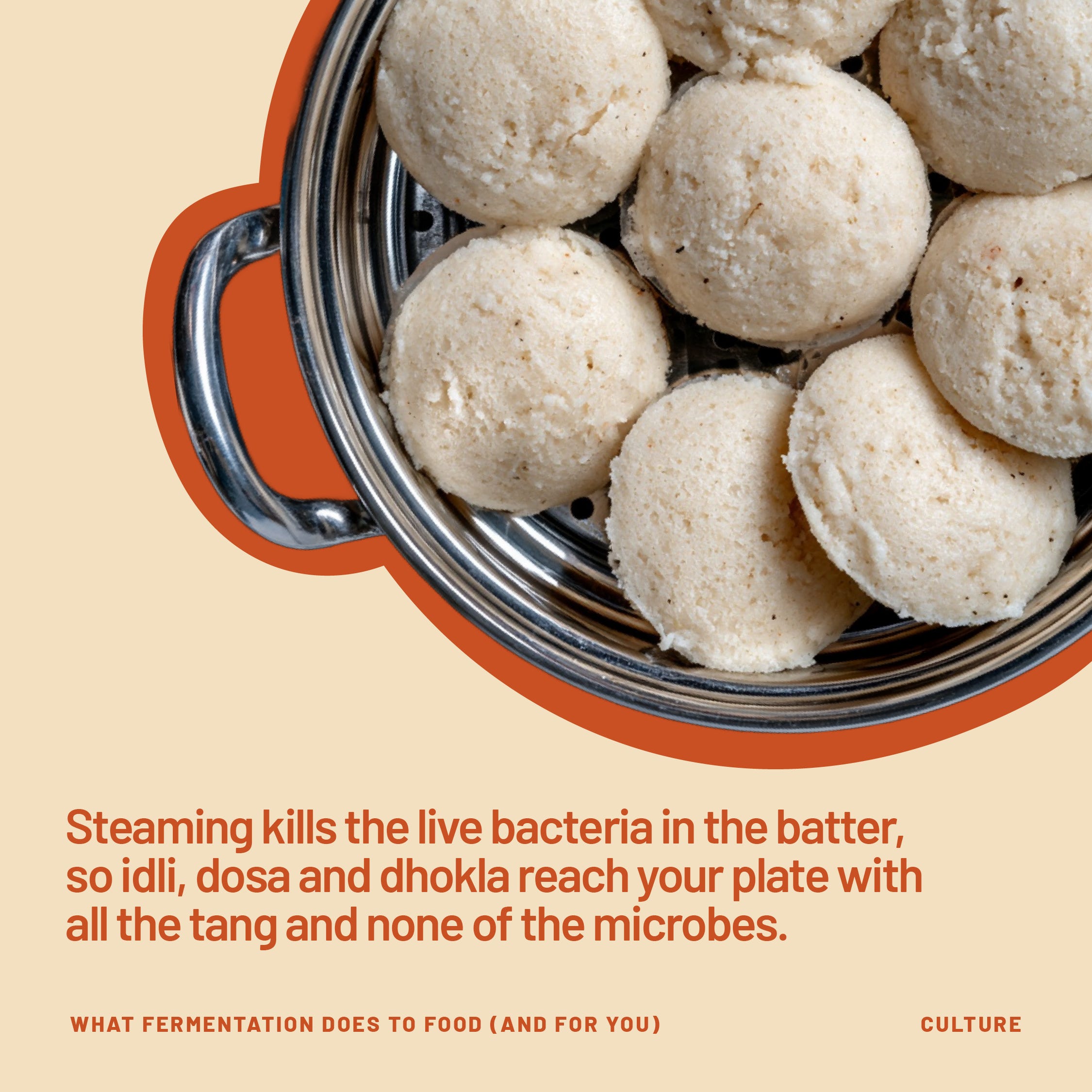
Heat kills the microbes, so if you’re wondering if your idli is still alive, the answer is nope. Steaming an idli, frying a dosa, or simmering curd into kadhi keeps the first two benefits and almost certainly ends the third; the same goes for kinema and axone cooked into curries. Dahi, raita, chaas, kanji and panta bhat reach you alive. Cooked ferments are good for digestion and minerals, and live ones are good for the gut. Homemade dahi is the most reliable, since you know it hasn’t been heated since it set.
The same process, a step earlier
Mille’s protein is made by bio-fermentation. Yeast is grown in large fermentation tanks and left to do what yeast does: multiply. The cells are then broken down and the protein extracted and dried into a powder, so the yeast itself becomes the food. The result is a complete protein, with all nine essential amino acids, made without animals or dairy. It scores 1.0 on PDCAAS, the standard measure of how well a protein is digested and used by the body, the same as whey. Like an idli, it reaches you already worked on by microbes, and nothing in it is still alive by the time it does. Because it holds up to heat, you can add it straight to dal or dosa batter, putting the newest ferment in the kitchen alongside the oldest.
1,000 Ways to Live Well is a Mille publication. Mille is a modern nutrition brand built around everyday rituals, starting with protein that doesn't ask you to compromise on taste. millesupergrain.com