


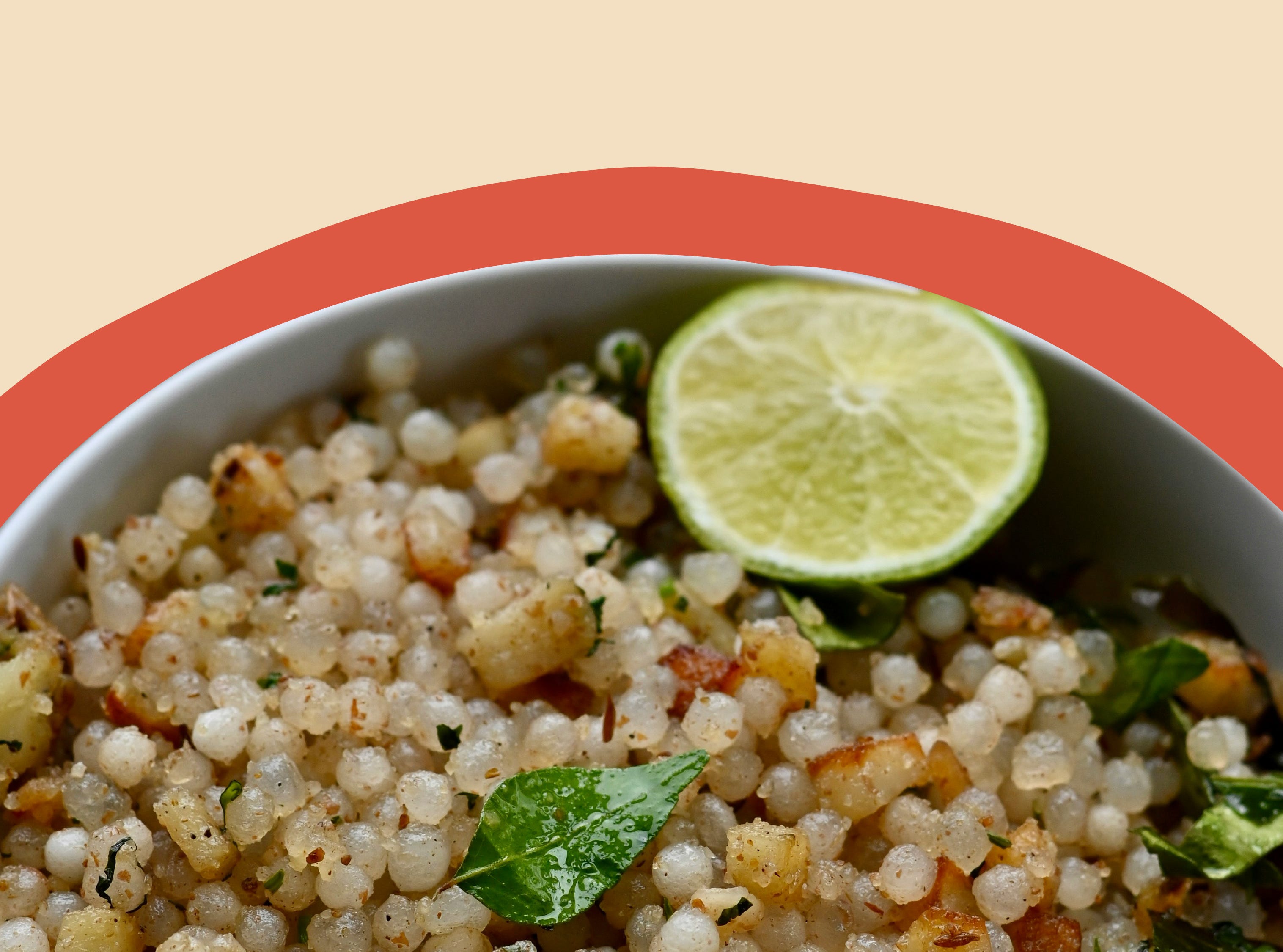
Twice a year, at the seasonal hinges, much of India fasts. In most Hindu households in North India, sabudana soaks overnight this week. Kuttu atta comes down from wherever it’s kept between Navratris. Someone in the family, usually a woman, reorganises the kitchen: onions to the back of the drawer, garlic out, sendha namak (rock salt) in a small jar near the stove. This is the second day of Navratri, a twice-yearly observance in the periods of Chaitra and Sharad. These specific routine shifts might vary by region and household, but overall, the shape is recognisable across most of the country for those nine nights.
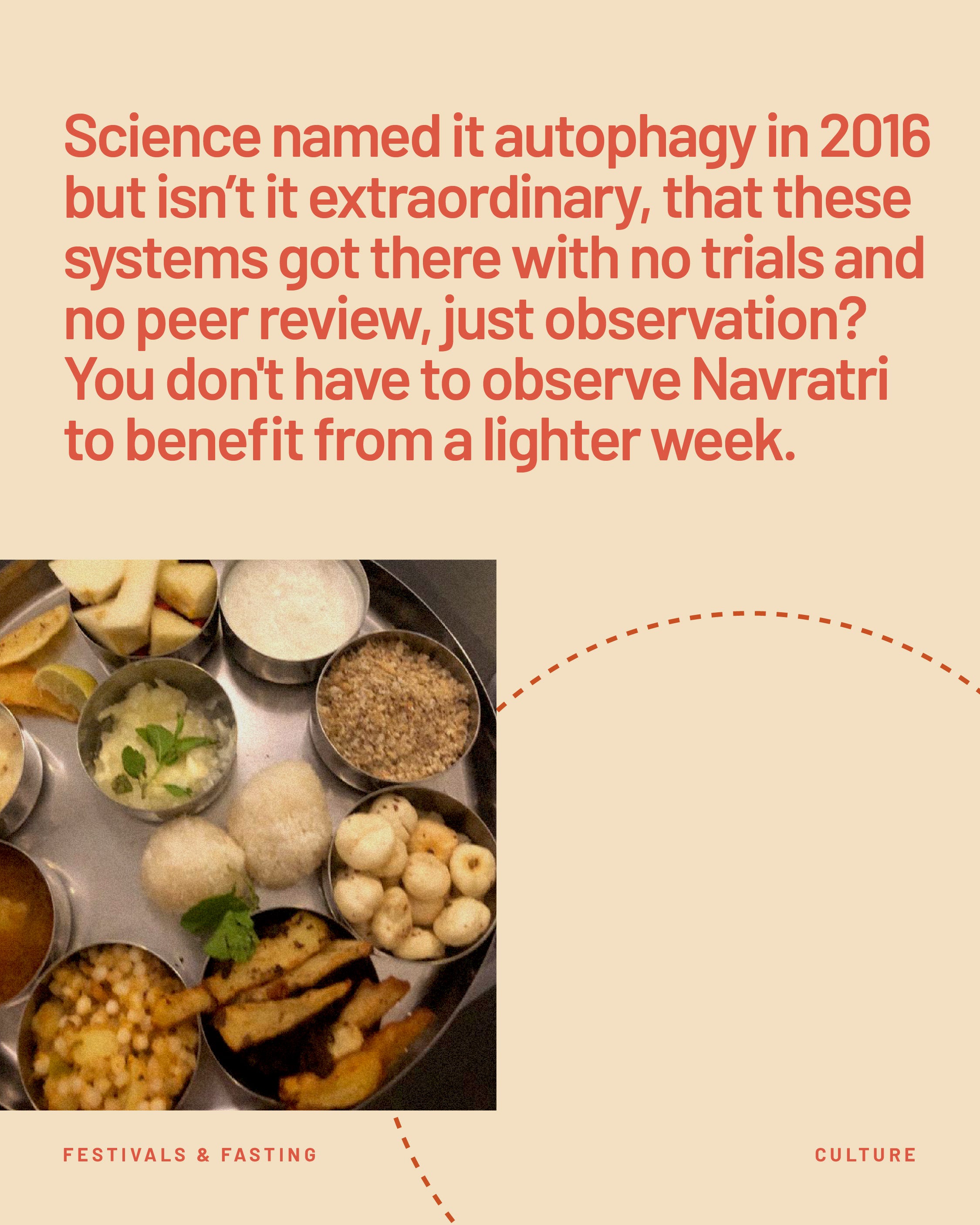
The reason given is devotional. Navratri honours the goddess Durga in her nine forms, and the fast is understood as purification: the bodily vessel is cleaned so the mind can attend, and that’s reason enough for most people who observe it and who shift to buckwheat, amaranth, water chestnut flour, sabudana, seasonal fruit, dairy, rock salt. No wheat, no rice, no lentils, no onion, no garlic.
Fasting traditions that survived long enough to become religion tend to have a practical layer underneath. The two Navratris fall at the transitions in the Indian year, the shoulders between hot and cold, wet and dry. Digestion is compromised in these weeks. Immunity is at its lowest. The weather is turning, and the body is trying to catch up. Every permitted food is easy to digest, low in gluten, and low in fibres that ferment slowly in a sluggish gut. They’re also often seasonal: buckwheat and amaranth are harvested in autumn. Water chestnuts come into season in the same weeks. For centuries, rock salt was what the interior of the country cooked with before sea salt travelled inland.
In 2016, Japanese cell biologist Yoshinori Ohsumi won the Nobel Prize in Physiology or Medicine for describing autophagy, the process by which the body, during periods of restricted food intake, breaks down and recycles its own damaged cells. It happens at a low level all the time, and accelerates during fasting. This acceleration is protective and is now implicated in cellular repair, immune function, and the prevention of a range of neurodegenerative diseases.
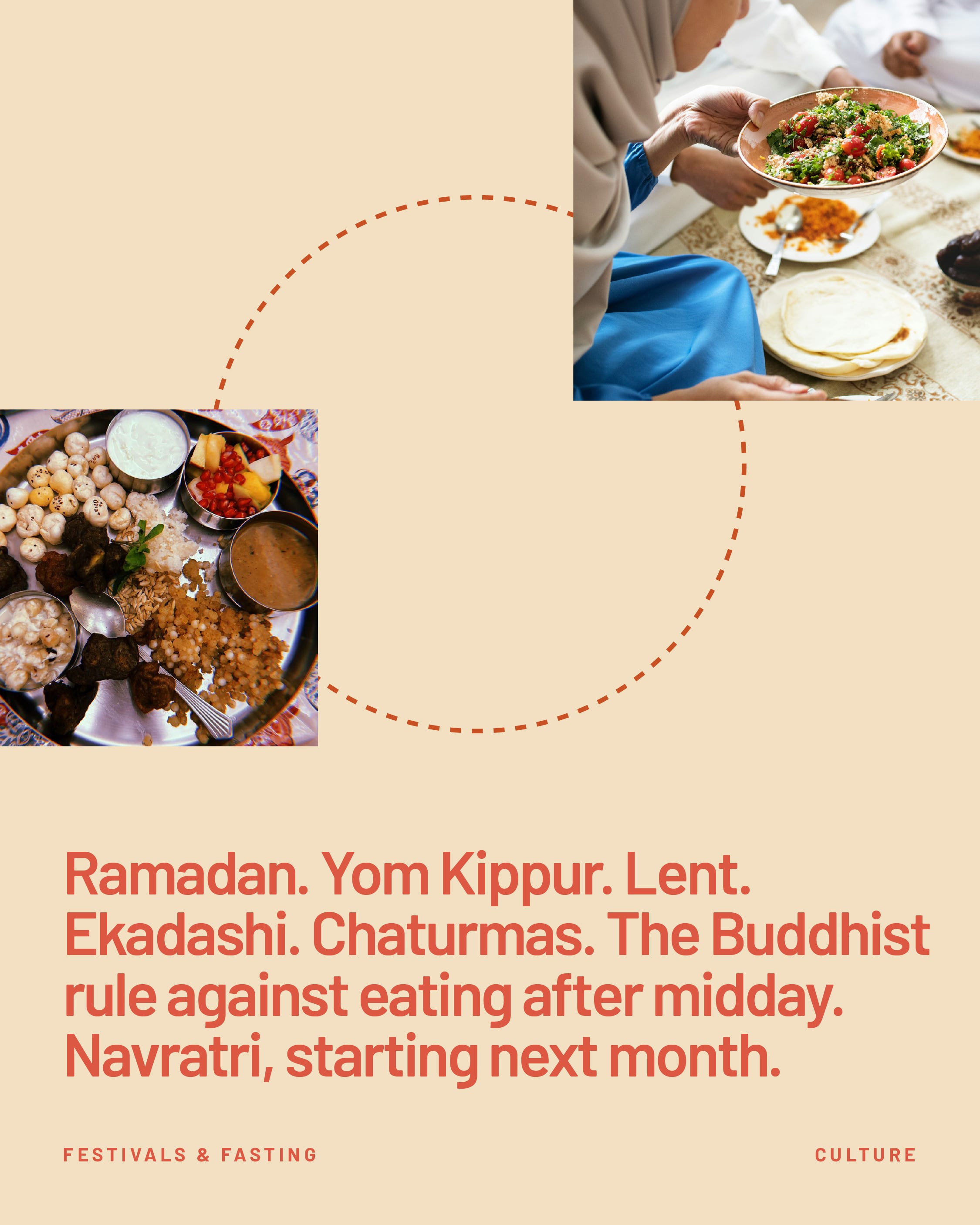
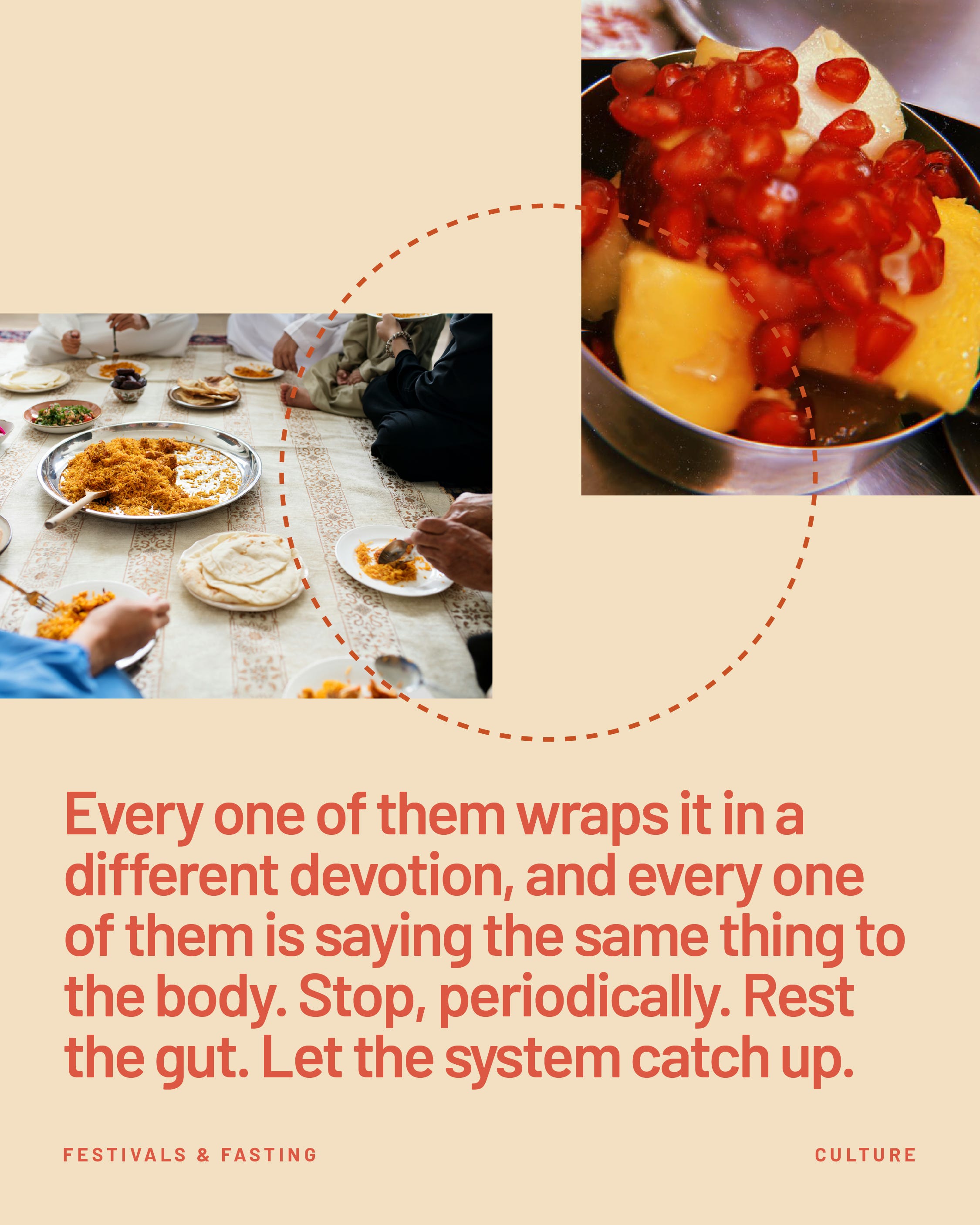
Since then, research into time-restricted eating, seasonal metabolic protocols and the effects of digestive rest on inflammation has moved from the margins of the field, and there is now a substantial and growing body of evidence for what fasting traditions across India, Japan, the Mediterranean and the Middle East have practised for centuries, and in some cases for millennia. Ramadan, Yom Kippur, Lent, ekadashi, chaturmas, the Buddhist practice of not eating after midday. The reasons given differ; different traditions wrap the practice in different devotions, but really, the underlying patterns are the same. Periodically, the body is asked to stop.
Of course, science has validated it now, but isn’t it extraordinary that the systems from which these practices sprang did so without controlled trials or peer review, relying only on observation and inherited wisdom passed down across generations? But somewhere in the last two or three generations, seasonal eating fell from favour, particularly in urban centres. Refrigeration and air-freight mean that mangoes can appear in December and strawberries in July. Rice and wheat moved into parts of the country that had historically eaten neither. No one said it explicitly, but suddenly the body could adhere to a single routine all year round, no matter what the weather or seasons outside were saying. And so fasting, in this context, became one of two things: a religious duty or a wellness trend. Endurance, or optimisation, both stripped of seasonal context, and valued more for their effects on weight or productivity.
But blessedly, the vocabulary of seasonal eating, gut rest and metabolic variation is showing up in places it wasn’t a decade ago. Nutritionists trained in Western frameworks are folding in Ayurvedic principles. Younger cooks are asking what their families used to eat in October, and why. Menus in Delhi and Mumbai shift with the calendar in ways that would have been unthinkable in years when having everything available all the time was lauded as a marvel.
The sabudana khichdi is on the stove now, in the same kitchen. Peanuts in, green chilli, a squeeze of lemon at the end. It will be eaten with chaas and fruit. Tomorrow, kuttu ki puri with aloo. The day after, singhare ka halwa. On the tenth day, the fast breaks and the kitchen returns to its usual rhythm. This has happened here for four generations, and it will happen again in April. You don’t have to observe Navratri religiously or even know the word autophagy to benefit from a lighter week. What the tradition offers, stripped of doctrine, is an invitation to notice that October is not May, and to let your plate reflect that.
1,000 Ways to Live Well is a Mille publication. Mille is a modern nutrition brand built around everyday rituals, starting with protein that doesn't ask you to compromise on taste. millesupergrain.com