



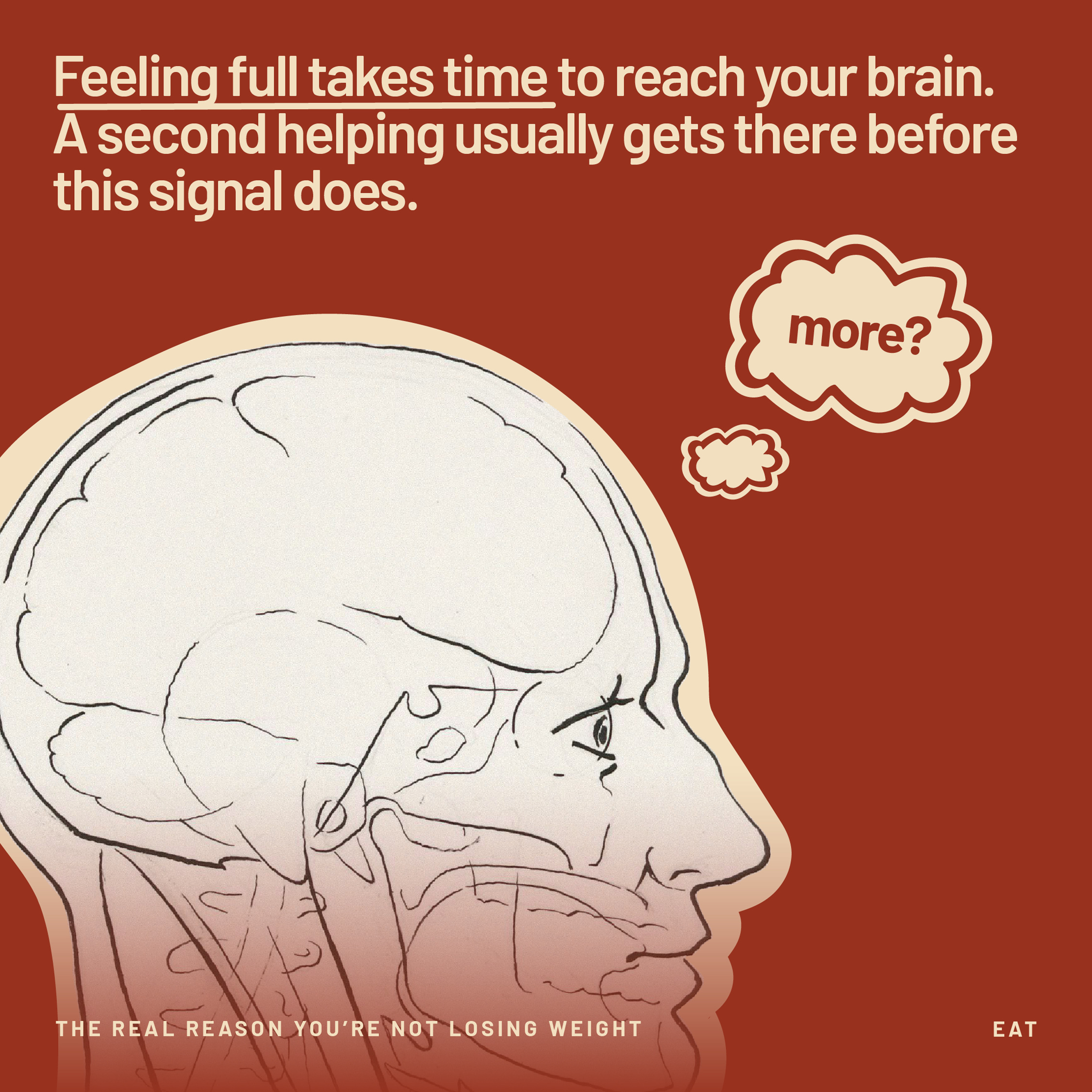
It’s a scenario that’s all too familiar: someone’s decided you haven’t eaten enough. It might be a mother with the ladle already over your plate, an aunt at a wedding who treats ‘bas’ as a mere opening bid, or a host for whom an empty katori is a small insult. Ek aur roti arrives before you’ve finished refusing it. It works because of timing. The signal that tells your brain you’re full is slow, carried by hormones that take a while to reach their mark, and that second helping usually beats it to the finish line.
In many homes, feeding someone well is how you tell them they matter, and then the habit is built: eating faster than our fullness signal can travel. The conversation between gut and brain runs largely along the vagus nerve, which travels from the brainstem down to the heart, lungs and digestive tract. When you start to eat, the stomach stretches, and sensors in its lining begin signalling straight away. Feeling full depends on a second set of messengers. As food reaches the intestine, it triggers hormones including GLP-1 and PYY, which travel through the bloodstream and make those stretch sensors more responsive. There’s a pervasive myth that it takes 20 minutes, but in fact the amount of time that signal takes varies a great deal from person to person.
A body and a culture built for scarcity
The body manages its weight around a set point, like a thermostat holding a room at a pre-selected temperature. Much of this runs on leptin, a hormone made by fat cells. The more fat the body carries, the more leptin it releases, and the brain reads that level to judge how much energy is in reserve. When you eat less and leptin falls, the brain registers a shortage and turns the heat up, with more hunger, less energy, and a stronger pull toward food. For most of human history this made perfect sense, since a body that held on to its reserves had a better chance of getting through the lean months.
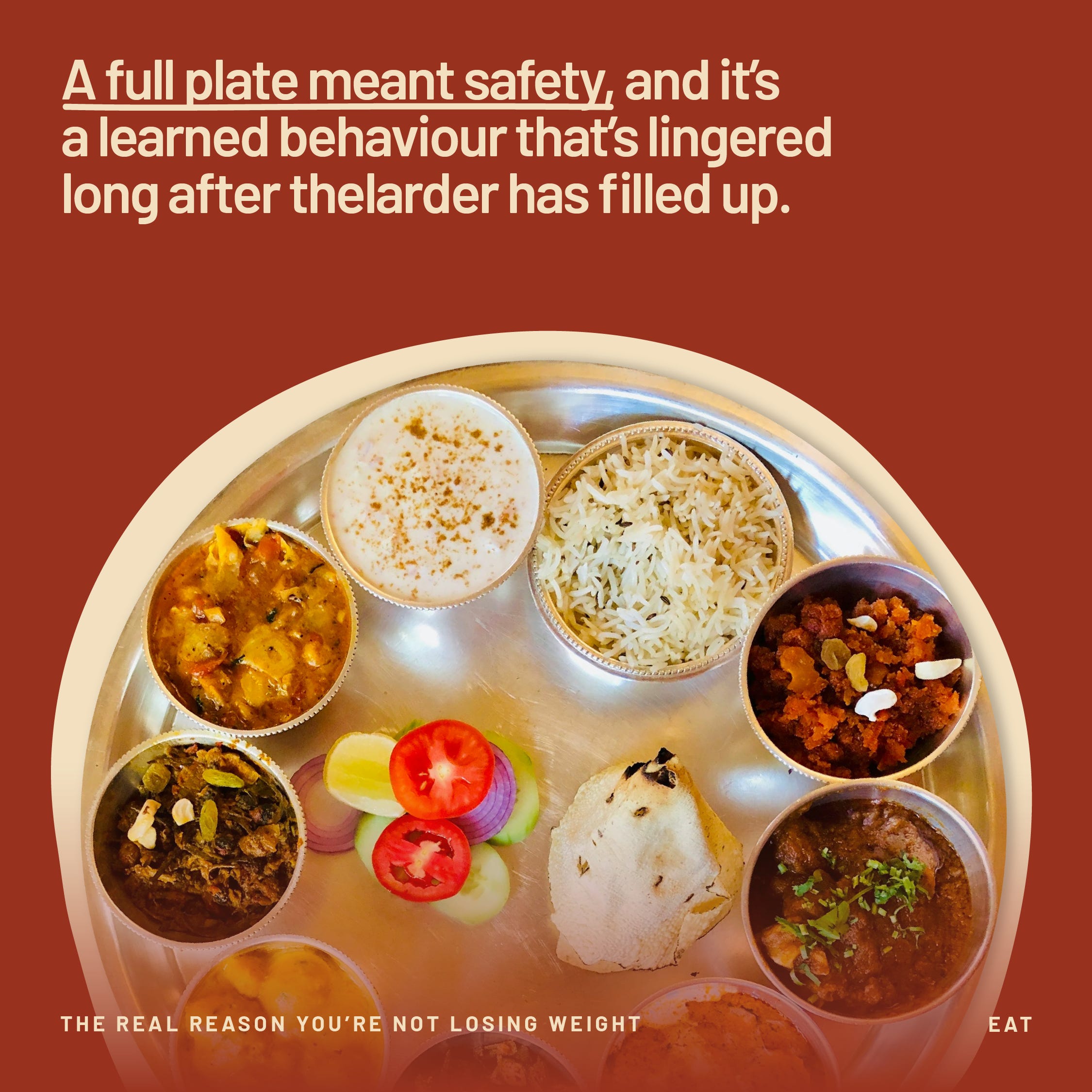
One way to read Indian hospitality is as the cultural version of the same instinct. In a country that has known failed harvests and famine within living memory, making sure everyone at the table ate their fill while there was food to share was care, and refusing help can feel like refusing kindness. A full plate meant safety, and it’s a learned behaviour that’s lingered long after the larder has filled up.
What changed?
If the body defends its weight so carefully, the obvious question is why average weights have risen for decades. One explanation is that the set point behaves more like a settling point, a level the body drifts towards depending on its surroundings, and those surroundings have changed faster than human biology can. Food is now abundant, available at any hour, and much of it is engineered to be easy to eat in large amounts.
In a tightly controlled 2019 trial at the US National Institutes of Health, 20 adults lived on a research ward and ate as much as they wanted from either an ultra-processed or a minimally processed diet, for two weeks each. The meals were matched for calories, sugar, fat, fibre and carbohydrate. On the ultra-processed diet, people ate about 500 more calories a day and gained weight; on the minimally processed diet, they lost about the same amount. People on the ultra-processed diet also ate faster, which is the same race the ladle runs. The namkeen packet and the biscuit tin are, in fact, formulated to be devoured and to encourage you to eat more (and more!).
Dieting turns the same system against you. Cut back hard and leptin falls, hunger rises, energy drops, and food starts taking up more of your thoughts than it did a fortnight ago. At higher body weights, the brain tends to become less responsive to leptin, so it reads the reserves as lower than they are and pushes back even harder. Even new weight-loss drugs that work directly on these signals run into the same wall. In an extension of the STEP 1 trial, people who stopped taking semaglutide after 68 weeks regained about two-thirds of the weight they had lost within a year. Fighting this system with willpower alone means fighting a body built over millennia to win.
Learning to hear it
The more useful skill is learning to hear your fullness signal, and most of it fits into meals you already enjoy.
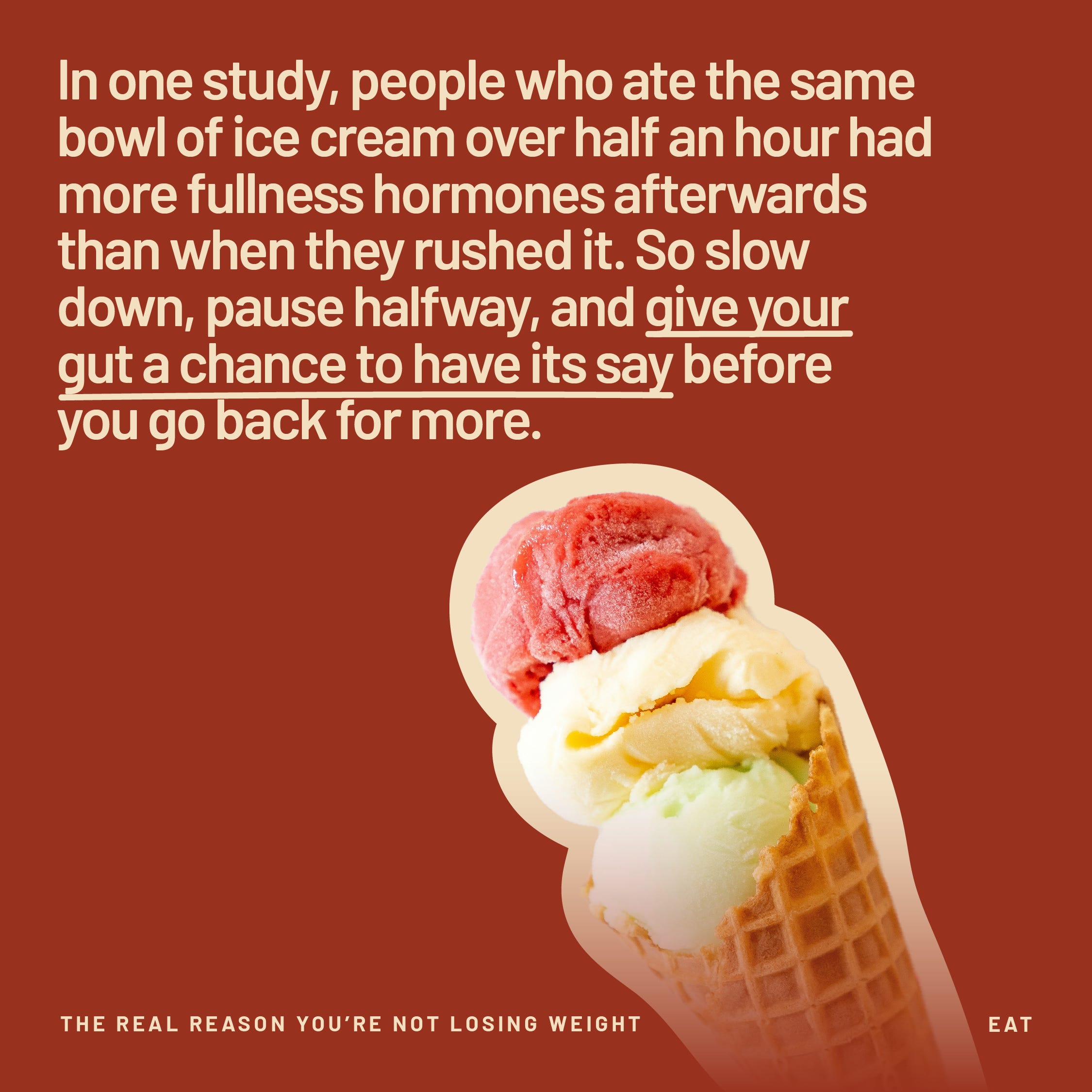
Slow down. Put the roti down between mouthfuls, eat with conversation, and pause partway through a meal to notice how hungry you still are. Serve yourself a modest first helping, so seconds become a choice. At someone else’s table, keep a little on your plate when the second serve comes round, since an empty plate is an invitation.
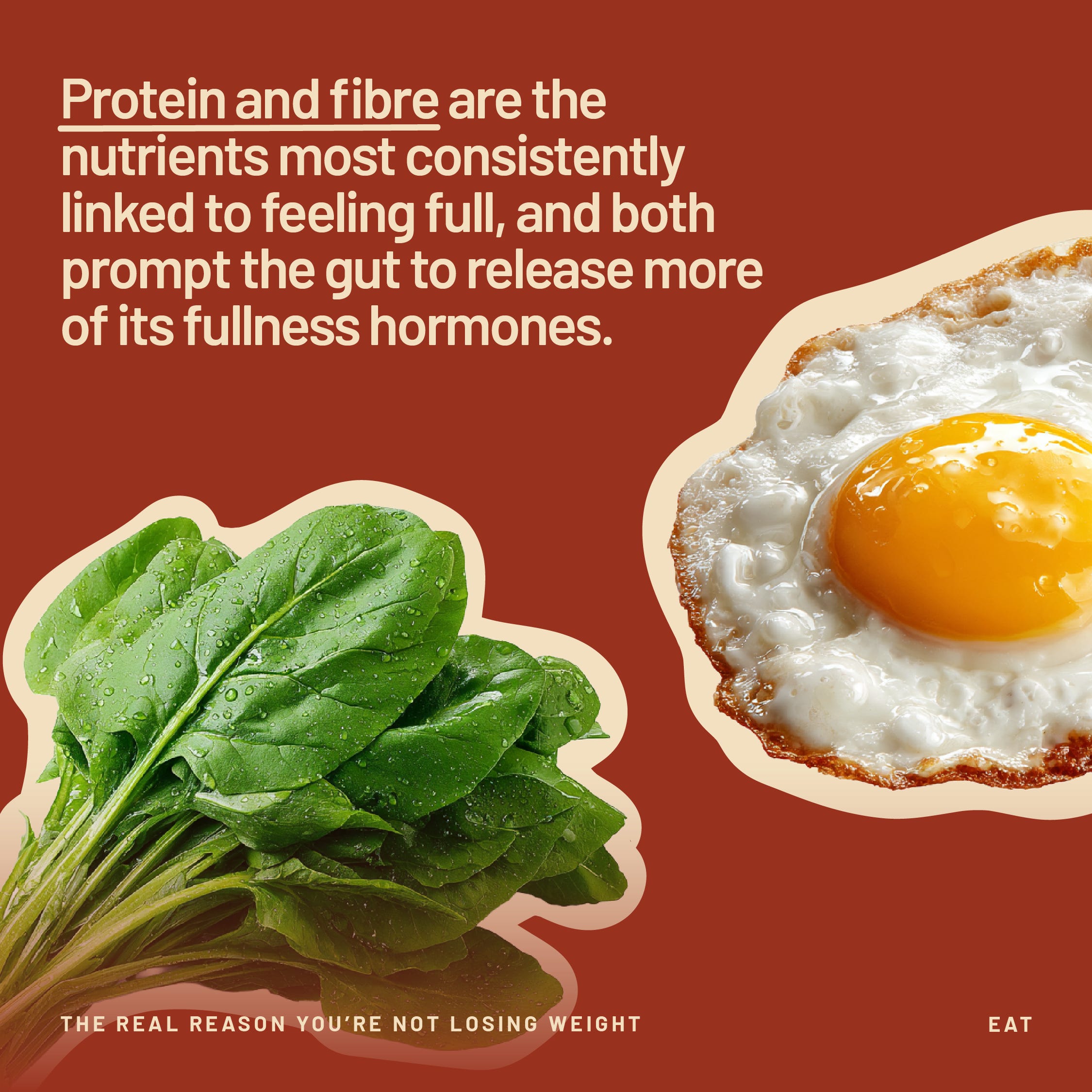
Build plates that hold you. Protein and fibre are the nutrients most consistently linked to feeling full, and both prompt the gut to release more of its fullness hormones. The evidence on how much this changes what people eat afterwards is mixed. In one trial, a high-protein breakfast raised those hormones, yet people ate about the same at their next meal. The realistic gain is feeling satisfied for longer. A plate built around dal, chana, paneer, curd and vegetables does this well, and millets such as jowar, bajra and ragi carry more fibre than polished rice or refined flour. Food cooked from recognisable ingredients appears easier for the body’s own signals to manage.
Sleep matters. In a small 2004 study, two nights of four hours’ sleep lowered leptin, raised the hunger hormone ghrelin and increased appetite, especially for calorie-dense, carbohydrate-heavy food. Later studies have been less consistent about the hormones, but a larger lab study of 225 adults found that restricted sleep led to weight gain. A run of short nights turns up the hunger and makes the fullness signal even harder to hear.
All that said, being fed is one of life’s great pleasures. Eat slowly enough to give your gut a chance to have its say, and you may find the second helping is exactly what you wanted, and the third is the one you wave away with a smile. The point is to give yourself the space to know which is which.
1,000 Ways to Live Well is a Mille publication. Mille is a modern nutrition brand built around everyday rituals, starting with protein that doesn't ask you to compromise on taste. millesupergrain.com