


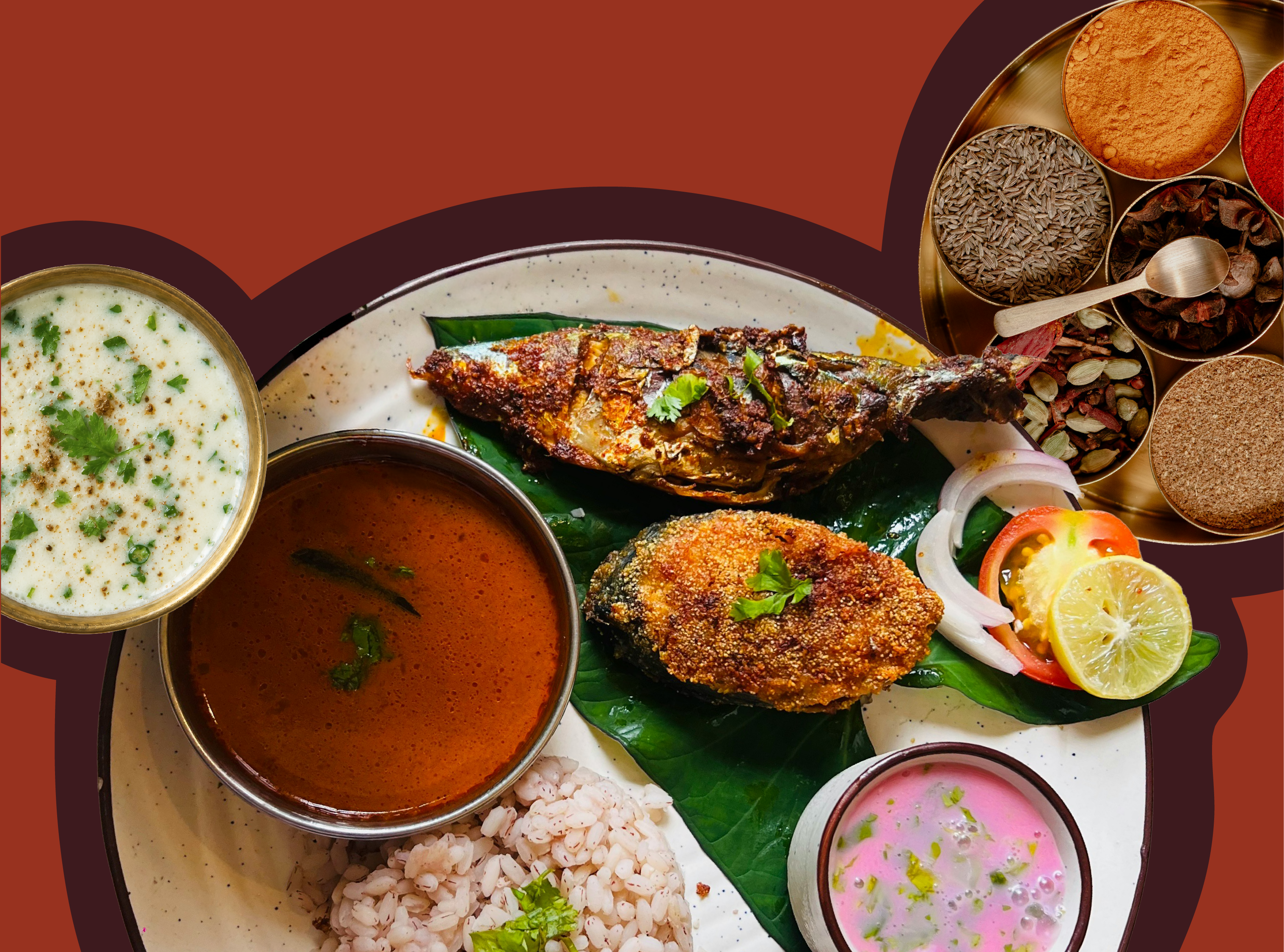
Every child knows the call. In India it’s “Khaana khaaya?” The question sounds different in China, Korea or Britain, but at heart it’s the same thing. Have you eaten? For most of our lives, the question came the other way around.
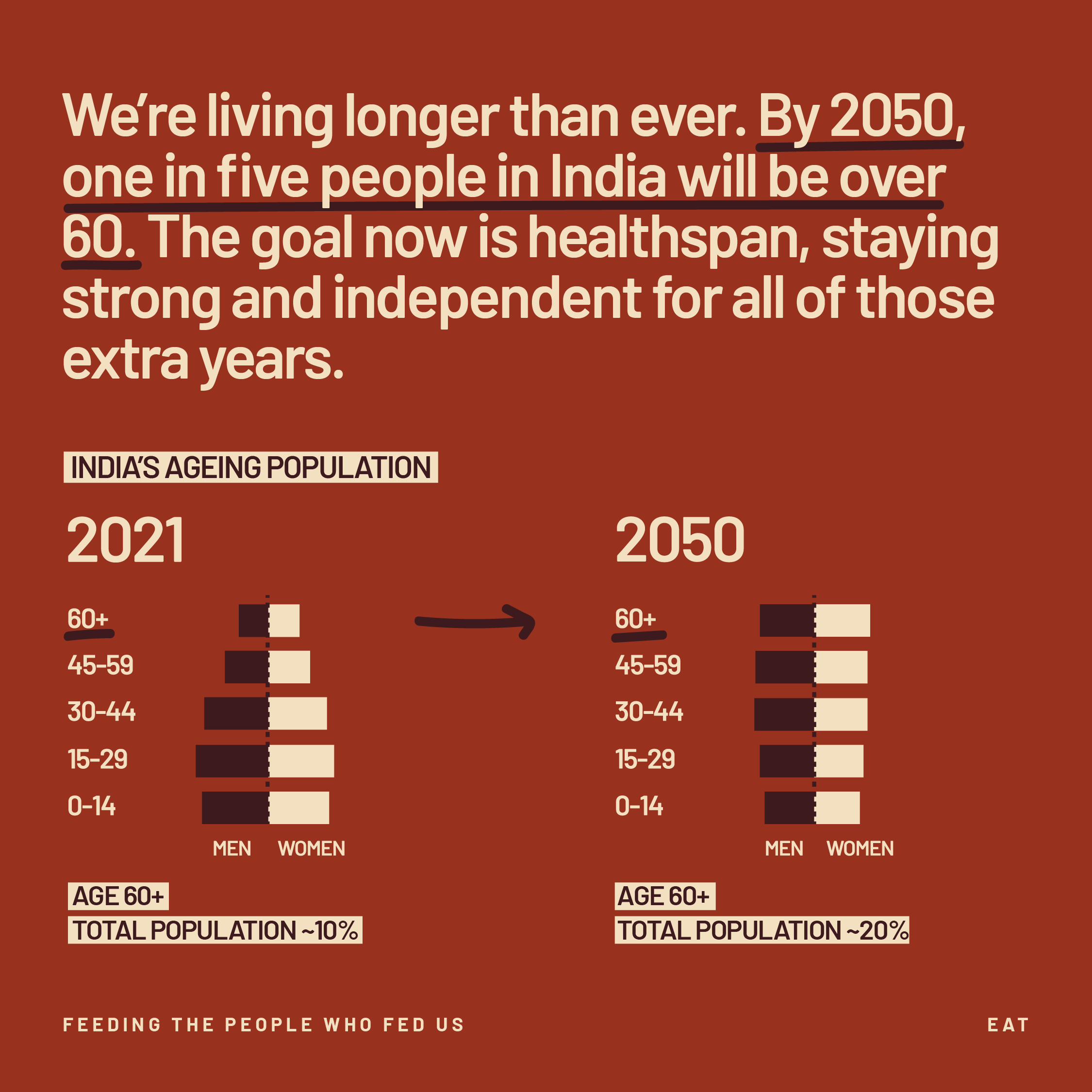
People are living longer, and many are choosing to live on their own terms, in the homes they built, keeping their own routines and making their own plans well into their seventies. The Longitudinal Ageing Study in India found that about 6% of older Indians live alone, rising to 9% among women. UNFPA’s India Ageing Report 2023 projects that people over 60 will make up 20.8% of India’s population by 2050, up from 10.1% in 2021. Families split between Delhi and Dubai, or Leicester and London, will recognise this situation. The data raises a question for every generation at the table. What kind of eating will keep us strong enough to enjoy all those extra years?
Why older bodies need more
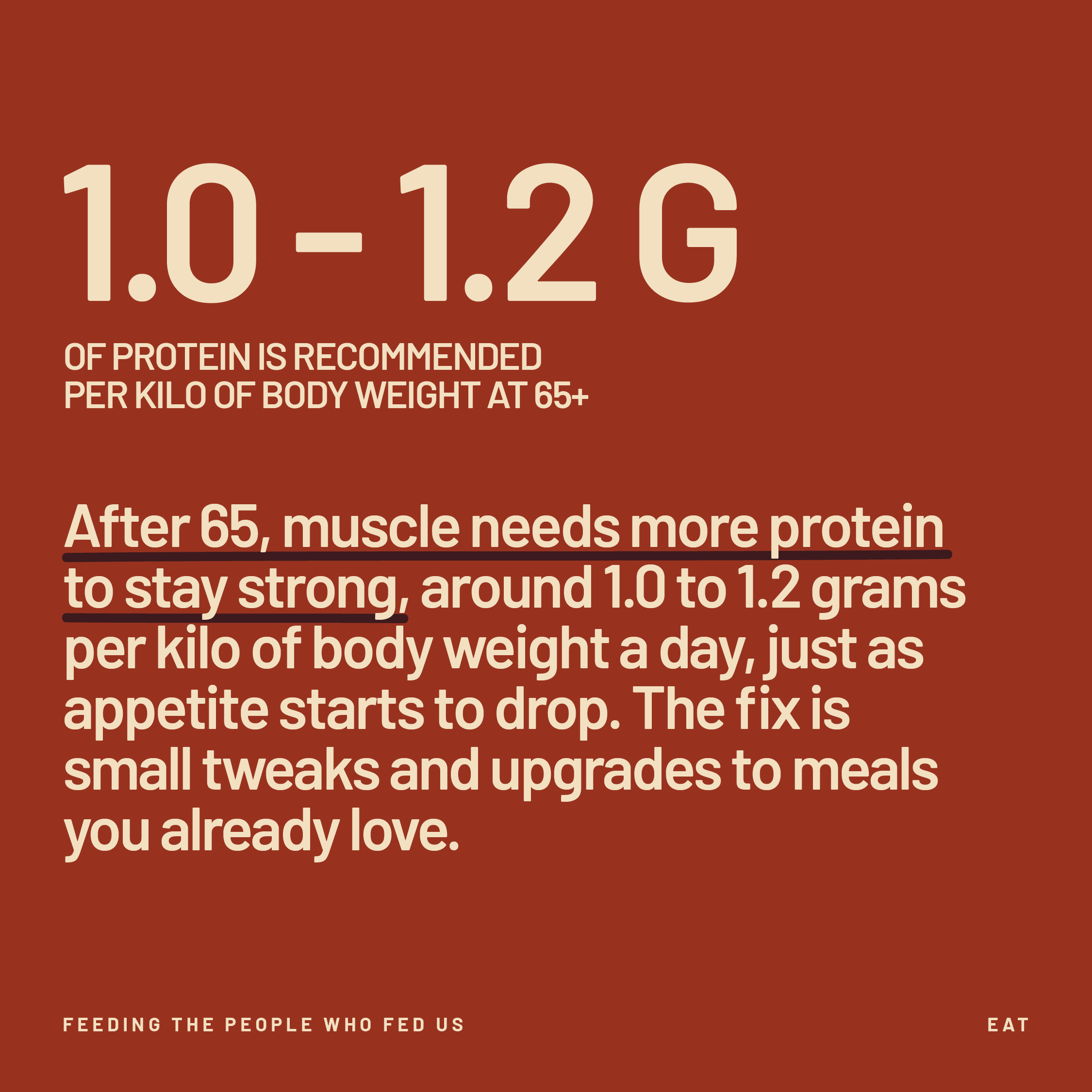
Protein needs rise with age just as appetite tends to fall. Older muscle responds less efficiently to the protein it receives, so it needs more to do the same job of maintaining itself. In 2013, an international group of geriatric specialists known as PROT-AGE recommended that people over 65 eat 1.0 to 1.2 grams of protein per kilogram of body weight a day, and more during illness. For someone weighing 60 kilos, that’s roughly 60 to 72 grams. The group also suggested that older muscle responds best to around 25 to 30 grams in one sitting. India’s reference intake for adults is 0.83 grams per kilo, close to the general adult figure PROT-AGE considered too low for older people, so even the experts are still settling the numbers.
Eating that much gets harder just as it matters more. India’s 2024 national dietary guidelines note that ageing often brings changes in appetite, taste and smell, and cooking for one or two rarely gets the same effort as cooking for a full house. Picture a familiar day, with toast or poha (flattened rice) for breakfast, a sandwich or roti and vegetables at lunch, and soup or khichdi (rice and lentils) at night. Each meal is comforting, and none comes close to 25 grams.
Muscle lets any of us travel, carry our own shopping, get down on the floor to play with grandchildren, and keep living the way we choose. Keeping it is a large part of keeping that independence, at 70 and at 40.
What a good day of eating looks like
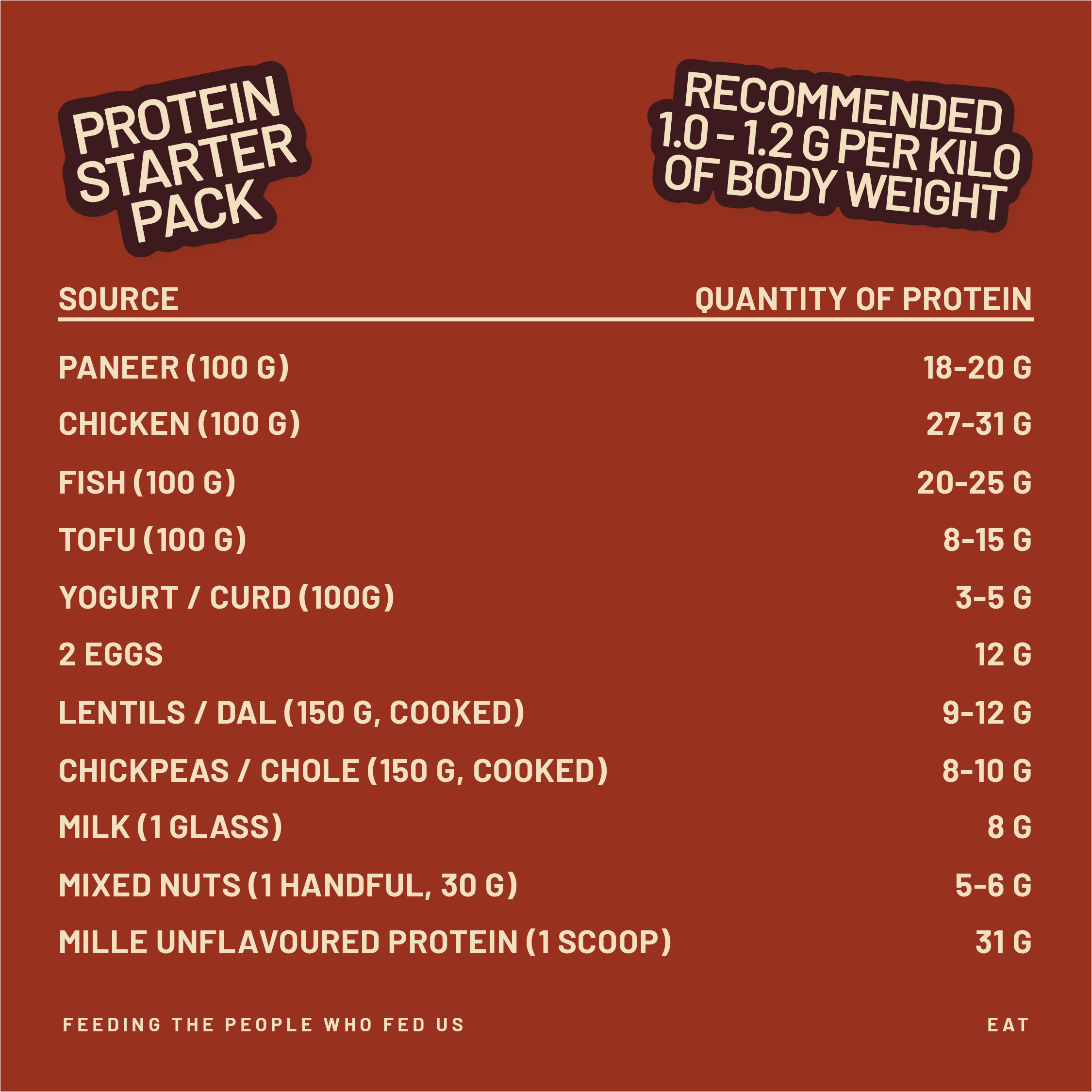
India’s dietary guidelines recommend pulses, legumes, milk, eggs, fish and meat to improve both the amount and the quality of protein we eat as we age, and most of the work comes from small upgrades to food we already like. Eggs at breakfast, whether boiled, scrambled or folded into an omelette, are among the easiest wins. A bowl of thick yoghurt or curd, a glass of chaas (spiced buttermilk), or cottage cheese or paneer crumbled into a salad or a sandwich adds protein without much effort. Lentils do a lot of work in any cuisine, whether as a thicker dal, a lentil soup, or beans on toast. Fish, chicken and tofu fit easily into weekday cooking, and a handful of nuts or a spoonful of hummus turns a snack into something more substantial. Spreading protein across the day helps, since muscle makes the most of it at each sitting.
Talking about it at home
The tricky part is the conversation. Advice about food rarely lands well from children to parents, who have run their own kitchens and their own health for decades and are often well read on nutrition, sometimes better than their children. Parents, meanwhile, know exactly how a lecture about breakfast feels, having delivered plenty. The more useful way to see it is that this applies to everyone at the table. We are all living longer, and the habits that keep a 70-year-old strong are the ones a 40-year-old will want in place when they get there.
The easiest way in is to eat this way together. Eggs at a shared breakfast or a thicker dal at dinner work for every generation, and changing what the whole family eats feels very different from telling one person what to eat. Conversations go better when they start from what everyone wants to keep doing, whether that’s long walks, travel, a game of cricket with the grandchildren or simply running your own home for as long as you like. People also tend to eat more, and more variety, in company than alone, which is reason enough to share more meals.
Mille’s unflavoured yeast protein powder fits into this way of eating. It has no taste of its own and holds up to heat, so it can be stirred into dal, soup, khichdi or pancake batter, adding protein to meals people already love without asking anyone to start drinking shakes. It also comes as a savoury chaas with 25 grams of protein per serving.
Whichever end of the phone you’re on, the question is the same, and so is the aim: a long life and the strength to enjoy it.
1,000 Ways to Live Well is a Mille publication. Mille is a modern nutrition brand built around everyday rituals, starting with protein that doesn't ask you to compromise on taste. millesupergrain.com